Design
An autonomous excavator on a job site slowed itself down. No fault, no alarm. Its safety system had been tripped by a dirty sensor, decided it was seeing an obstruction, and did exactly what it was designed to do. The robot was working correctly. The site was just being a site, with dirt. They all have dirt.
That is a small incident, and it is representative of many things a robotics fleet runs into once it leaves the test environment. The interesting part is what happened next. The data to explain the slowdown existed on the machine. The engineers could have pulled it. But the person standing there was a field operator, and there was nothing between the operator console and the engineering debug tools that would let them see what the robot had seen and make a call.
In this video, Steve and Clark, our co-founders, with Fernando, one of the engineers on the project, talk through the operations and support layer we built for this client. This post is the longer version of why that layer keeps turning up as the missing piece in off robot software in so many Physical AI projects, and how we approach building systems like this.
The scaling pattern
Early fleets get supported directly by the engineers who built them. Five or ten robots in the field, and the team can debug on the go, learn from every incident, and dogfood their own tooling. It works, and it is genuinely the right way to run a fleet at that stage because the learning is so dense.
Past a certain fleet size, the same arrangement starts consuming the engineering team. Every incident becomes an interrupt. Autonomy engineers spend afternoons explaining sensor logs to support staff. The organization needs an operations layer, with its own tools and its own workflows, and building it is a real engineering project that nobody planned for. For this client, we built that layer and, for a period, we also ran it for them.
Learn how the incidents actually get investigated
The operator experience is built to run the machine. Engineering tools are built to develop and debug it. Support sits between them and usually inherits nothing from either side, which is why so much fleet support runs on Slack threads and screenshots.
We started by working alongside the client's engineers on live incidents, watching how they investigated each one. Which telemetry they pulled first. What they looked at on the map. How they decided a slowdown was an obstruction reading rather than a planner fault or a full blown hardware malfunction. What they needed to know before they would trust an operator to clear it and carry on. That investigative process, repeated across many incidents, is the actual specification for a support tool. It exists in the engineers' heads long before it exists anywhere else.
Build the support experience the fleet needs, then keep building
The first version was in front of the support team in about a week. That speed matters less as a benchmark than as a method. A support tool built for a growing fleet has to be in use early, because the fleet keeps producing new failure modes and the tool has to grow alongside them.
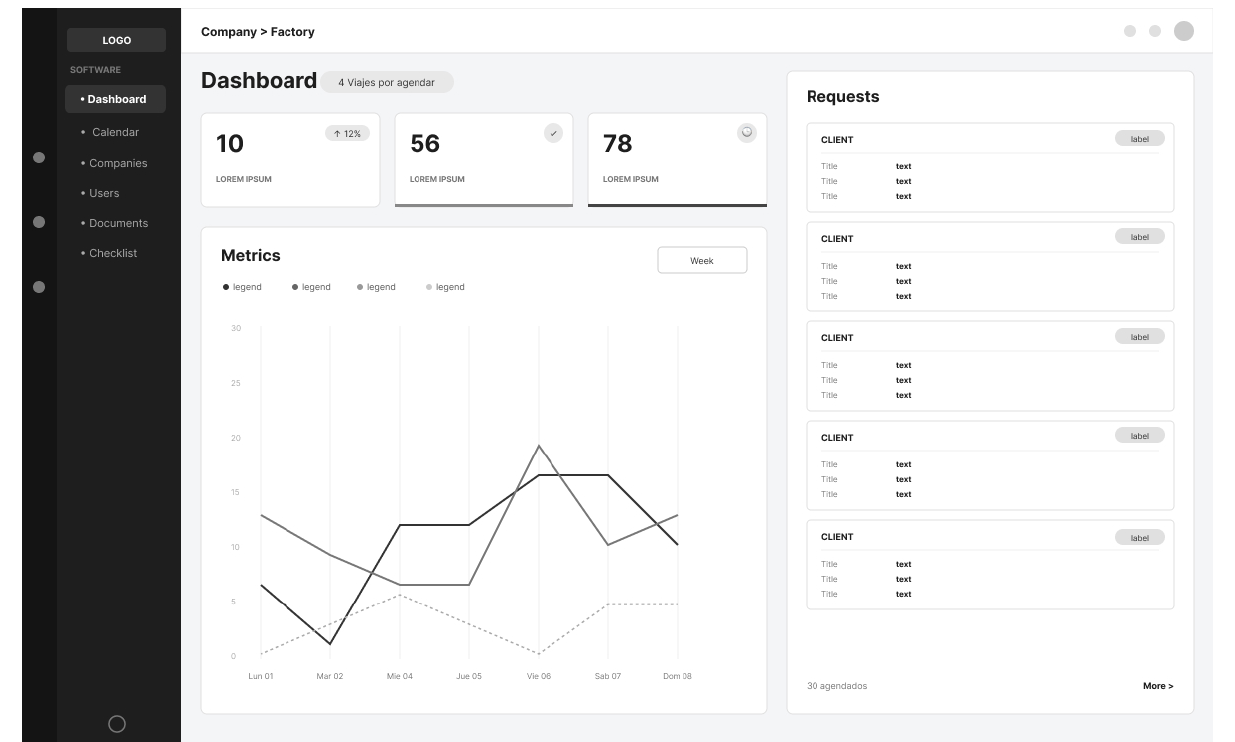
The core was live fleet state, telemetry, and incident history, presented with enough context that a support operator could explore what happened and either resolve it on the spot or escalate with something an engineer could act on immediately. The dirt-as-obstruction workflow was one example among many. As their fleet grew, our team kept extending the diagnostics and custom workflows as operations discovered what it needed, working directly with the client's engineers as new problems showed up.
The scope widened from there into a custom planner built around how an excavator actually moves earth, and a set of civil engineering views so that the people managing the site could see progress in their own terms, rather than robot coordinates.
Why this layer is where the value shows up
For an engineering leader, the calculation is usually about where their scarce autonomy engineers spend their time. Every hour on a support escalation is an hour off the roadmap, and the escalations scale with the fleet. A support layer that lets operations resolve the common cases, and hands engineering only the ones that need them with full context attached, changes the cost of those escalations.
It also changes what the organization can see. Once live state, telemetry, and incident history are in one place, the same foundation serves operations, support, customer reporting, and the engineers themselves. The tooling stops being a favor from the autonomy team and becomes infrastructure.
Where it landed
The client's engineers got their time back. Their support team can diagnose and clear most field incidents without an engineer in the loop, and the ones that do escalate arrive with the context already assembled. The fleet kept growing, and the tooling grew with it.
We see this class of problem constantly. The autonomy is capable. The software that should sit between what the robot knows and what the rest of the company can use is missing, because it was never anyone's job to build it. That is the off-robot software we build alongside robotics teams. Watch the video to hear how the team approached it, and if you build or manage a fleet that is starting to feel this, we should talk.
Insights